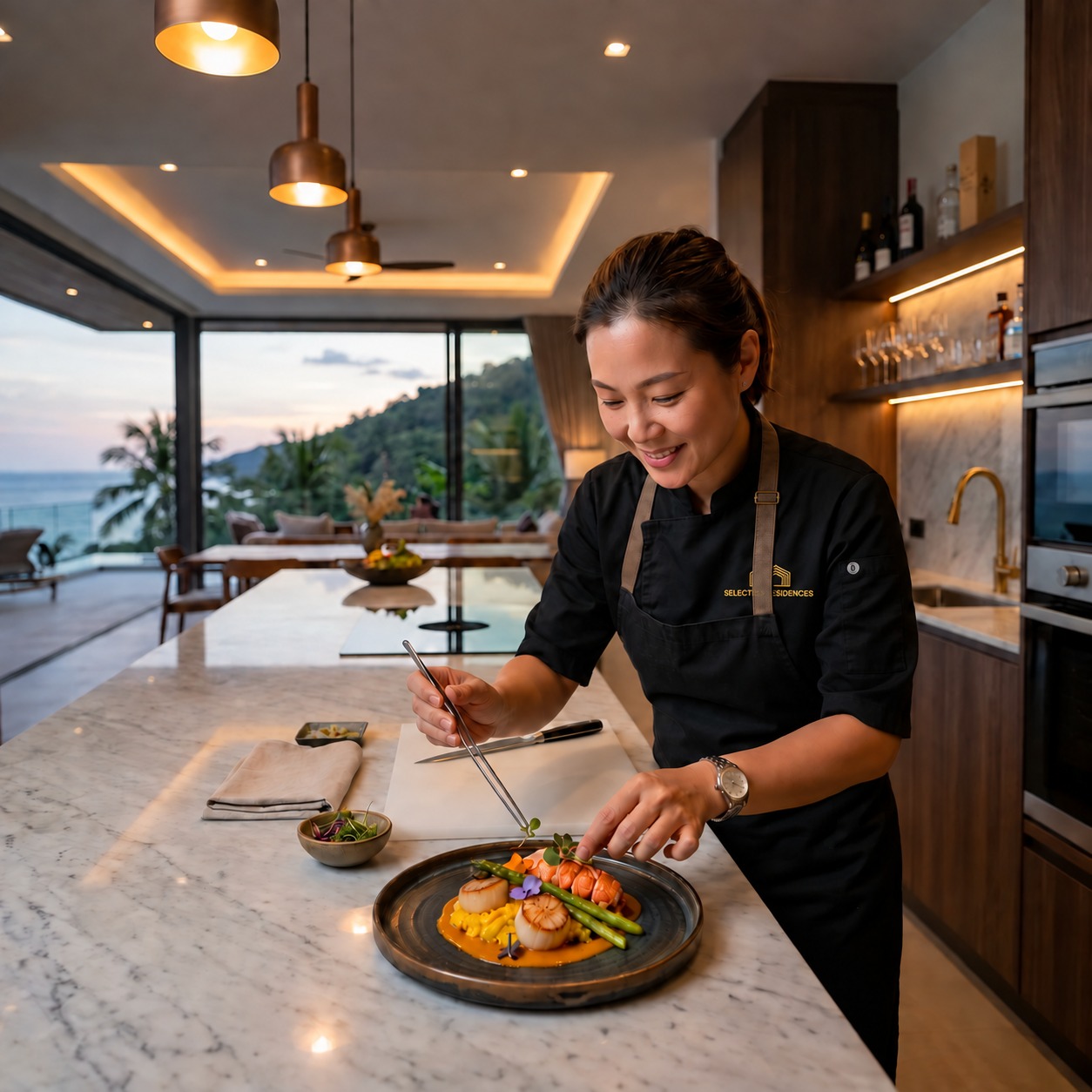

The chef is the visible part of in villa dining and the smallest part of it. What decides whether a private dinner is memorable is sourcing, timing and the kitchen it has to be cooked in, and all three are settled long before anyone lights a burner.
A UNESCO City of Gastronomy since December 2015
On 21 December 2015 Phuket was added to the UNESCO Creative Cities Network as a City of Gastronomy. That is not a tourism slogan, it is a designation given to a food culture with real depth, and Phuket’s comes from its Hokkien and Peranakan kitchens rather than from its resorts.
The Michelin Guide makes the same point from the other direction. Of the island’s sixty entries in the 2026 edition, eighteen are Bib Gourmands, and that list runs through Old Town shophouses, a salt grilled duck stall and a crisp coconut pancake counter. One star, eighteen Bibs. The depth is not at the top of the price list.
Yet the standard villa dinner anywhere on this island is a competent international menu that could be served in Dubai or Marbella without changing a line. That is the real missed opportunity, and it is not a budget problem.
A guest can eat a good international menu anywhere. They can eat a Phuket Hokkien kitchen in exactly one place.
One dinner, one day
Where a villa dinner is actually decided
Almost none of it happens in the villa, and almost none of it happens in the evening.
THREE NIGHTS BEFORE
The menu is agreed
Three nights out is early enough to brief the chef, confirm allergies and plan sourcing, and early enough that nothing is locked to one species. The market has not happened yet, so the menu is written around what will be landed rather than around what is left.
06:30
The market
Phuket’s fish markets work on a morning clock. The best of the catch is committed within the first two hours. By late morning a chef is choosing from what nobody else wanted.
MIDDAY
Prep, off site
Stocks, braises and anything that needs volume or extraction. A villa kitchen cannot do this without filling the house with smoke, which is the part nobody mentions.
LATE AFTERNOON
Into the house
Cold chain intact, prep in sealed containers, and a kitchen inspection before anything is unpacked. This is the step that gets skipped and the step that causes problems.
SERVICE
Finishing only
What happens in front of the guest should be assembly and heat, not cooking from scratch. If a chef is starting a braise at seven o’clock, the dinner was planned badly.
Our own operating sequence, not a cited figure. The market timings are Phuket specific and are the single most common reason a villa dinner is merely good rather than very good.
A villa kitchen is designed to be looked at
This is the constraint nobody warns an owner about. The open plan island kitchen that sells the villa in photographs is, as a working kitchen, close to the worst possible layout. It usually has one oven, no serious extraction, a cooktop positioned so that anything seared fills the living room, and prep space that disappears the moment three people are working.
A chef cooking a six course dinner for ten in that kitchen has two options. Do the heavy work elsewhere and finish in the house, which is what a good one does. Or attempt it in front of the guests, which is why some villa dinners run forty minutes late and smell of frying oil until the following morning.
None of this is an argument for a worse kitchen. It is an argument for knowing what your kitchen actually is, and planning the menu to match it rather than pretending the constraint is not there.
What to ask for instead of the international menu
- Moo hong. Pork belly braised slowly with black pepper and garlic, the dish Phuket households are judged on. It rewards long cooking, which makes it ideal for a villa dinner.
- Mee Hokkien. The island’s own noodle, fried with seafood and a dark stock. Simple, fast, and unavailable in this form outside Phuket.
- Whatever was landed that morning. Not a species chosen in advance. The best seafood course in Phuket is decided at the market and not before it.
- A pong. The thin crisp coconut pancake, cooked to order. One of the island’s Bib Gourmand entries in the 2026 Michelin guide is a stall that makes nothing else.
- One course that is not Thai at all, because a six course dinner of unfamiliar food is a test rather than a pleasure. The best private menus alternate.
The best seafood course on this island is chosen at half past six in the morning by somebody standing on a wet floor.
What is already in the kitchen
A private chef arrives with a menu, not with equipment. Every kitchen we manage is checked against a list of more than thirty items, from the small appliances to a full service of cutlery, glassware and serving pieces sized to the maximum sleeping capacity, counted between stays rather than after a complaint. A chef walking into one of our houses is not short of anything he planned to use.
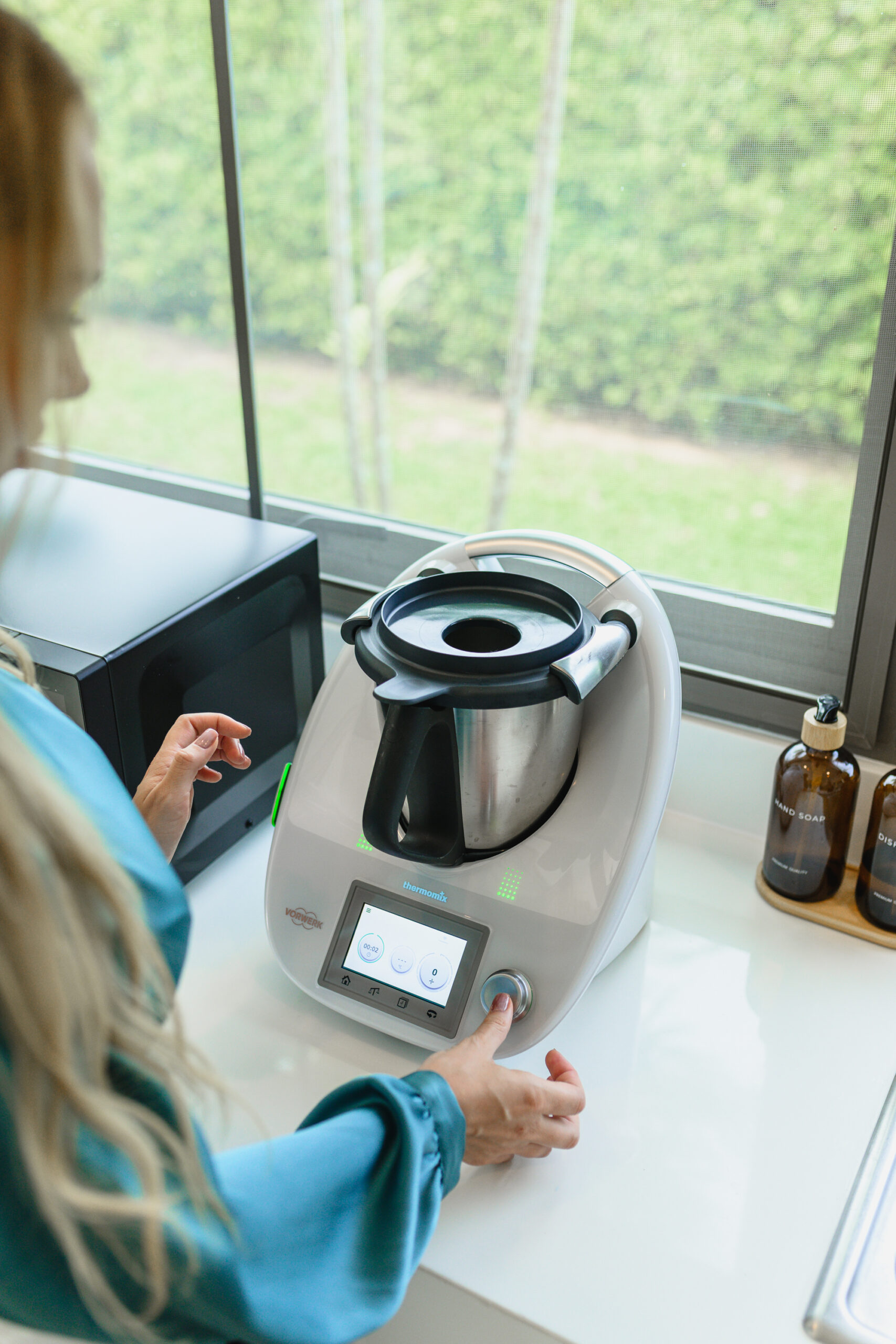
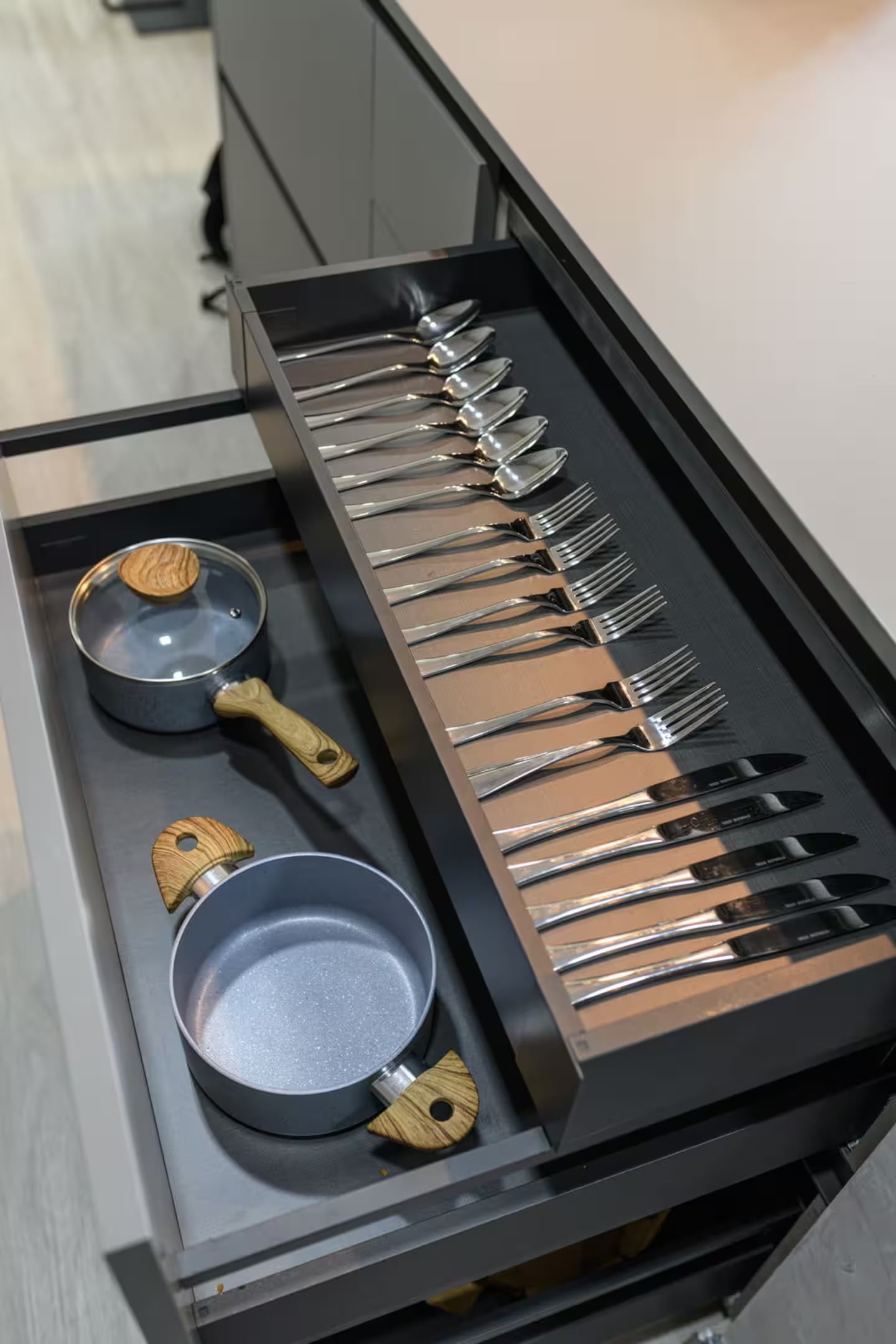
It sounds like a small thing. It is the difference between a chef cooking the menu he planned and a chef improvising around what the kitchen turns out not to have.
The floating breakfast, and being honest about it
It photographs better than it eats, and everyone in this industry knows it. Served badly it is lukewarm food on a tray in chlorinated water, eaten quickly so the pictures can be taken before anything gets wet.
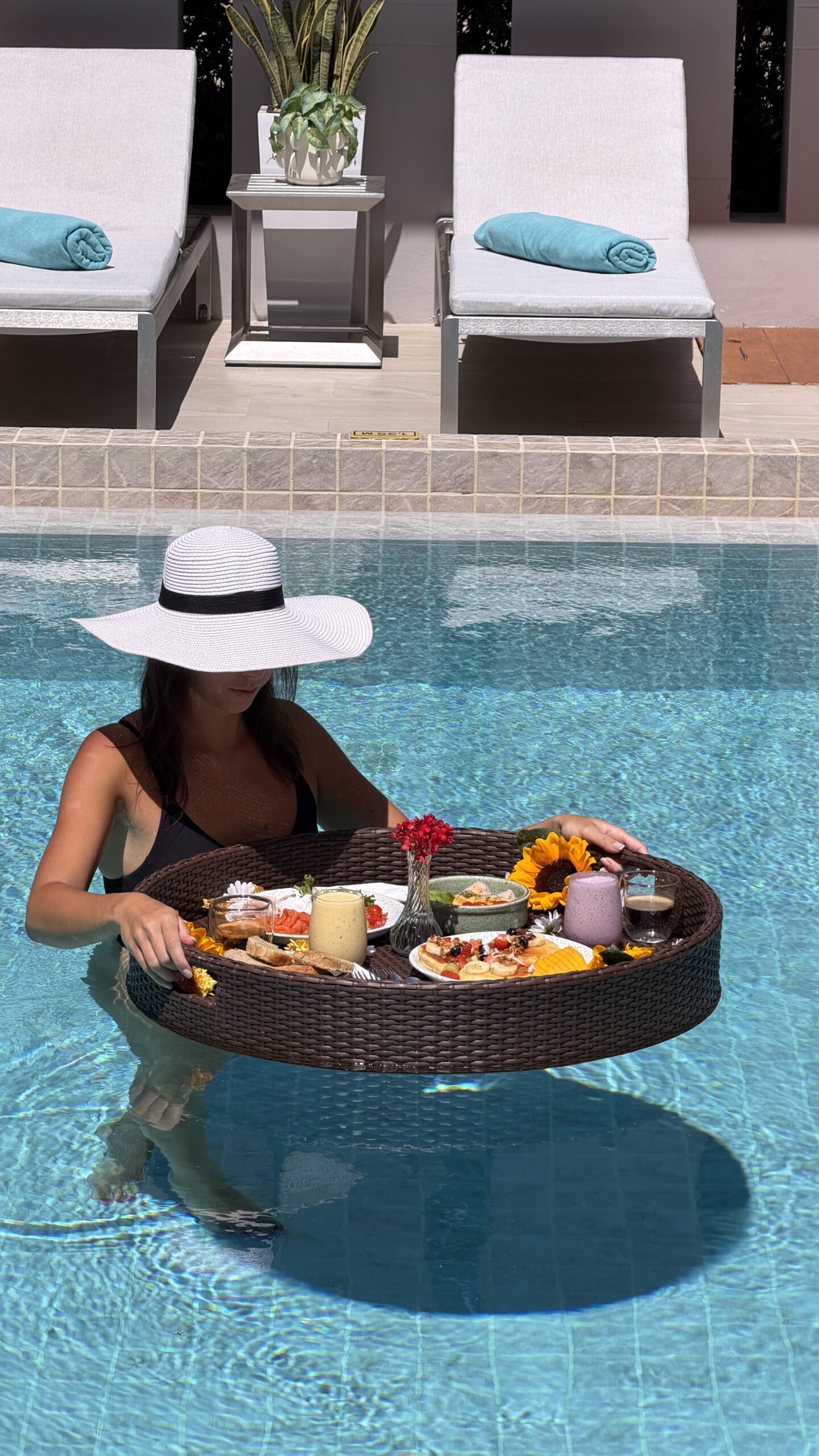
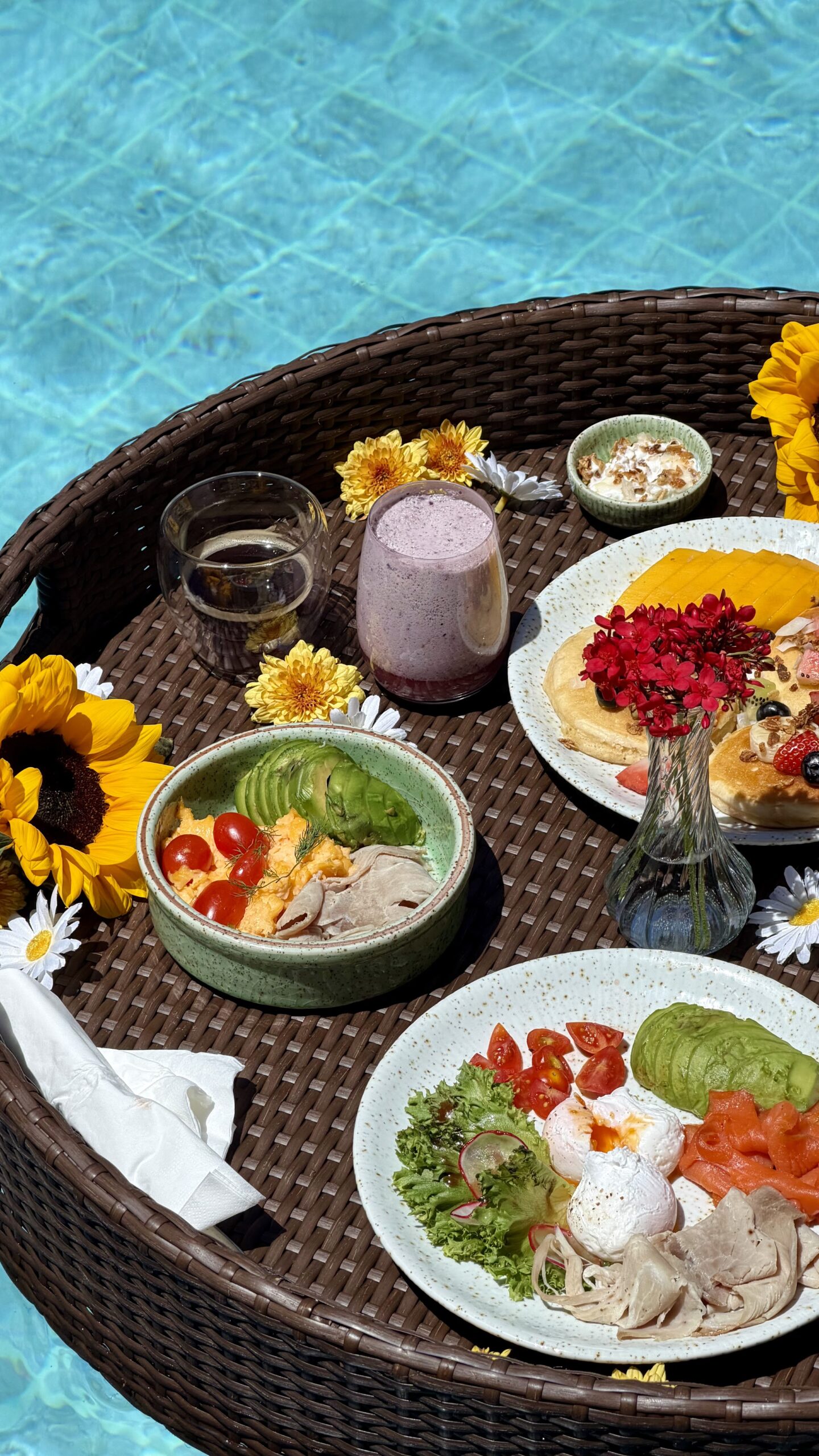
Done properly it works, and the rules are simple. Everything on the tray is either designed to be eaten cold or reaches the water within four minutes. Nothing requires a knife. Coffee comes separately and stays out of the pool. And there is no service window. It goes in when the guest asks for it, whether that is seven or eleven, because the one thing a villa can offer that a hotel restaurant cannot is the absence of a schedule.
We are happy to do it. We would rather a guest also had one proper dinner cooked by somebody who went to the market that morning, because that is the meal they will still be describing a year later.
The nights when nobody wants a chef
Not every dinner in a villa should be an occasion. Some evenings nobody wants to dress, nobody wants to sit down at eight, and nobody wants a stranger in the kitchen. Phuket is unusually good at that night. Most of the restaurants worth eating at will send food out to a villa, and the ones we work with directly send it packed and timed to arrive as dinner rather than as something that has been sitting in a scooter box since Chalong.
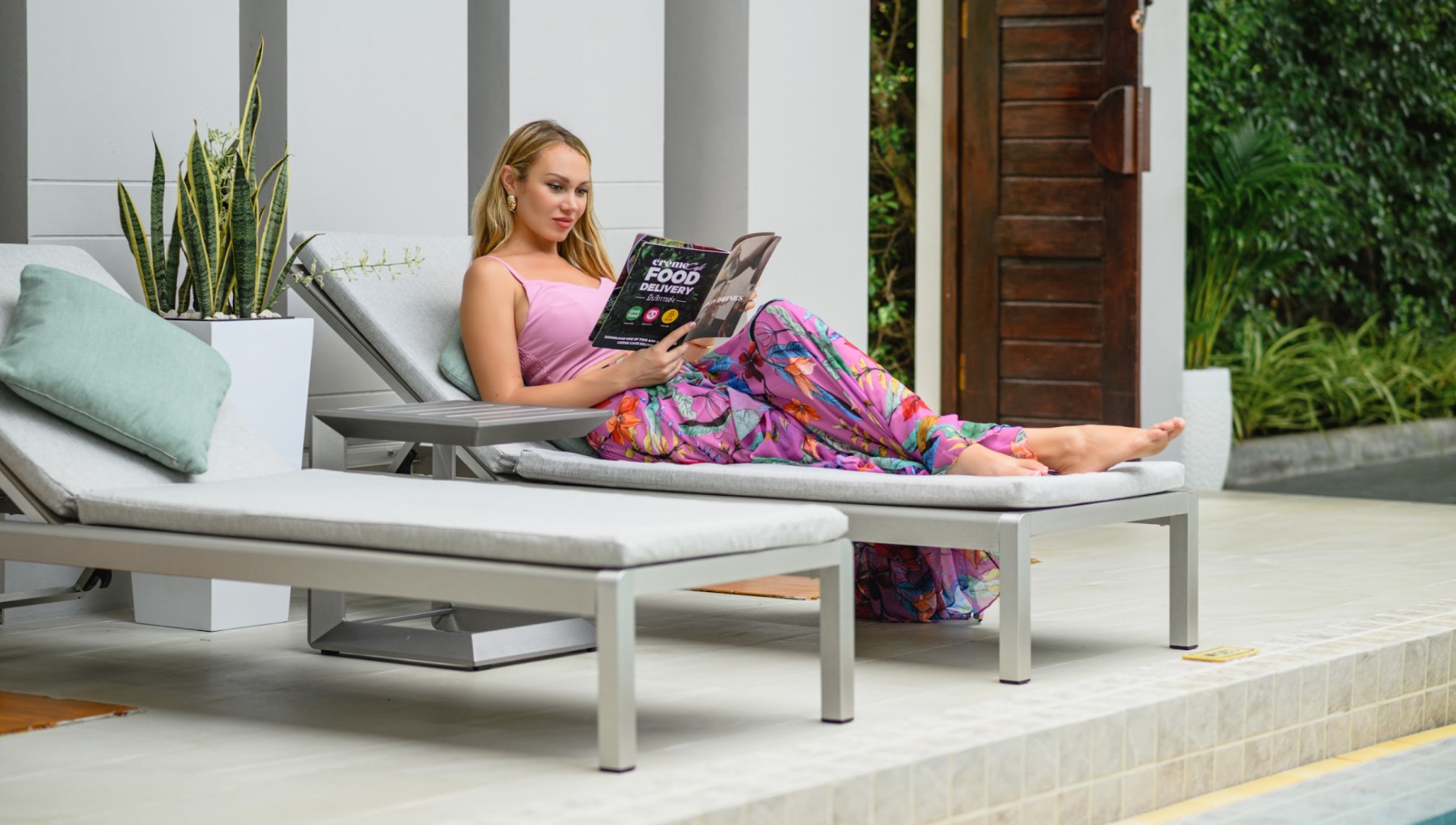
Groceries work on the same principle. Guests can have the market and the supermarket delivered to the house, and we keep a shopper on the team who does that run rather than handing it to whoever happens to be free. It matters more than it sounds. In Phuket the difference between a good basket and a bad one is knowing which stall to stand at and what the fish should smell like at nine in the morning, not which supermarket has parking.
The luxury is not that a villa can have anything delivered. It is that nobody staying in it has to organise the delivery.
What we do
We agree menus three nights before rather than on the day, so the market decides the seafood. We do the heavy preparation away from the house and finish in the kitchen, so the villa smells of dinner rather than of cooking. We check the kitchen before the chef is booked, because the kitchen decides what is realistic. And we put at least one genuinely Phuket course in front of every guest who will let us.
We also keep our chefs standing rather than sourced on request. In high season the good ones are committed weeks ahead, which means the honest answer to a request for a chef tonight is usually no, and the honest answer to the same request made at booking is almost always yes.
Sources. Phuket’s designation as a UNESCO Creative City of Gastronomy, announced 21 December 2015: Tourism Authority of Thailand newsroom, December 2015, read 24 September 2026. Phuket’s sixty entries in the Michelin Guide Thailand 2026 edition, comprising one star, eighteen Bib Gourmand and forty-one Michelin Selected, and the presence of a coconut pancake stall among the Bib Gourmands: Michelin Guide Thailand 2026 as compiled for Phuket, read 24 September 2026.